


“Inilah Dia yang telah datang dengan air dan darah, yaitu Yesus Kristus, bukan saja dengan air, tetapi dengan air dan dengan darah. Dan Rohlah yang memberi kesaksian, karena Roh adalah kebenaran. Sebab ada tiga yang memberi kesaksian [di dalam sorga: Bapa, Firman dan Roh Kudus; dan ketiganya adalah satu. Dan ada tiga yang memberi kesaksian di bumi]: Roh dan air dan darah dan ketiganya adalah satu. Kita menerima kesaksian manusia, tetapi kesaksian Allah lebih kuat. Sebab demikianlah kesaksian yang diberikan Allah tentang Anak-Nya. Barangsiapa percaya kepada Anak Allah, iamempunyai kesaksian itu di dalam dirinya; barangsiapa tidak percaya kepada Allah, ia membuat Dia menjadi pendusta, karena ia tidak percaya akan kesaksian yang diberikan Allah tentang Anak-Nya. Dan inilah kesaksian itu: Allah telah mengaruniakan hidup yang kekal kepada kita dan hidup itu ada di dalam Anak-Nya. Barangsiapa memiliki Anak, ia memiliki hidup; barangsiapa tidak memiliki Anak, ia tidak memiliki hidup” ( 1 Yohanes 5:6-12 )
Ada dua tujuan surat 1 Yohanes yakni :
Pertama : Memberikan dorongan kepada jemaat tentang pentingnya membina persekutuan dengan Allah dan Yesus Kristus.
Kedua : Memberikan kesadaran kepada jemaat untuk bersikap hati-hati terhadap ajaran sesat, agar mereka tidak tergoda menjauhi persekutuan dengan Yesus Kristus.
Ketika Rasul Yohanes menulis surat ini, ajaran Gnostik sebagai ajaran yang menyesatkan sedang mempengaruhi jemaat. Gnostik mengajarkan bahwa dunia ini penuh dosa. Maka siapa saja yang bersentuhan dengan dunia ini akan mengotori dirinya dengan dosa. Paham ini mengajarkan bahwa Yesus yang adalah Tuhan, tidak mungkin bergaul dengan dunia ini. Maka Yesus ikut berdosa dan tidak mungkin menjadi Mesias, Juruselamat dunia ini.
Saudaraku, jika kita mencermati ajaran sesat ini, maka sepintas lalu nampaknya seperti cukup meyakinkan karena menghormati Yesus dengan menghindari diri-Nya dari pengaruh dosa. Sepintas lalu ajaran ini hendak membela Yesus sebagai Tuhan dan karena itu tidak boleh bercampur dengan dunia yang najis ini. Yesus dijauhkan dari pengaruh dosa dan derita sebagai manusia.
Paham ini mengajarkan bahwa keselamatan yang dicapai, bukan melalui kedatangan Yesus ke dalam dunia ini yang penuh dengan dosa , tetapi manusialah yang harus berusaha mencari dan mengusahakan keselamatan dirinya dengan cara menjauhkan diri dari dunia dengan segala kenajisan dosanya. Barangsiapa yang ingin mengalami keselamatan, dia harus menjauhkan dirinya daripada dunia yang najis ini, menyendiri, berakskese, menyiksa diri dan bertapa. Dengan demikian diharapkan dia dapat membebaskan roh dari tubuhnya yang berdosa agar bisa bergabung kedalam Roh Allah Yang Maha Tinggi atau Allah Pencipta. Ajaran ini juga cenderung menjauhi pergaulan dengan sesama manusia dan menjauhi tugas-tugas sosial. Yang penting usaha keselamatan ini tertuju bagi diri sendiri yang berdimensi sorgawi, tidak untuk sesamanya manusia.
Menanggapi ajaran sesat ini, Rasul Yohanes menyatakan bahwa Yesus datang ke dunia sebagai manusia, menderita sengsara demi mewujudkan kasih-Nya dan menebus dosa umat manusia dan dunia ini. Ia tidak mengakhiri hidup-Nya pada kematian, tetapi kemudian bangkit dari kuasa maut. Karena itu Dia adalah Mesias, Anak Allah Yang Hidup.
Yesus datang dengan air dan darah. Artinya Ia memberikan diri-Nya dibaptis (dengan air) seperti kesaksian sorgawi oleh Injil Matius demikian : “ Inilah Anak-Ku yang Kukasihi, kepada-Nyalah Aku berkenan ( Matius 3:17 ). Yesus juga datang dengan darah artinya kasih Allah dinyatakan dalam kehadiran Yesus melalui penderitaan sampai mati di kayu salib. Roh Kudus yang adalah Roh Kebenaran memberikan kesaksian tentang kebenaran ini.
Dalam renungan ini ,Rasul Yohanes memberikan kesaksiannya tentang Yesus sebagai Mesias disaksikan oleh Allah Bapa, Firman yang adalah Kristus sendiri dan Roh Kudus ( 1 Yoh 5:7 ). Kesaksian ini benar. Karena itu kehadiran Yesus sebagai penebus dosa manusia patut dipercayai. Dengan demikian, kepercayaan ini tidak merupakan kepercayaan yang sia-sia, tetapi kepercayaan yang benar. Jadi barangsiapa yang percaya kepada-Nya mengalami hidup, namun bagi mereka yang tidak percaya tidak mengalami kehidupan ini.
Dewasa ini gereja tidak bebas dari pengaruh berbagai ajaran sesat. Sama halnya dengan pengalaman gereja-gereja dalam sejarah sebelumnya, gereja merumuskan pengakuan imannya untuk memagari dirinya terhadap pengaruh ajaran sesat. Gereja –gereja dewasa ini menegaskan pengakuan iman dan pemahaman imannya dalam kehidupan bergereja, agar tidak terjerumus kedalam pengaruh ajaran sesat. Tetapi sebaliknya aman dalam mengungkapkan imannya kepada Yesus Kristus, Mesias, Juruselamat dunia.
Soli Deo Gloria
=================================================


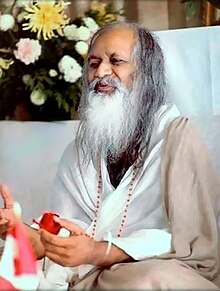
Keterangan Gambar :
Gambar diatas adalah : Maharishi Mahesh Yogi yang diambil fotonya bersama pemusik pop The Beatles. Maharishi mulai terkenal ketika di tahun 1950-an menjadi guru kebatinan pemusik pop “The Beatles”. Dia mengembangkan Transcendental Meditation (TM) yang merupakan latihan meditasi Hinduisme yang coba diilmiahkan dan meluas di negara-negara barat. Dalam bukunya yang berjudul “ Meditations Of The Maharishi “, Maharishi menyebut mengenai penebusan Kristus sebagai berikut :
“ Saya tidak yakin bahwa Kristus pernah menderita atau Kristus dapat menderita…..Sangat disayangkan kalau Kristus dibicarakan dalam kaitan dengan penderitaan “.
Kita melihat TM ( Transcedental Meditation ) bukan saja merupakan ajaran agama Hindu, tetapi juga merupakan ajaran yang mendiskreditkan arti penebusan Kristus di kayu salib, yang justru merupakan inti ajaran Kristen ! (Sahabat Gemabala)
=================================================
Maharishi Mahesh Yogi, meditation teacher
In the spring of 1959, the Indian meditation teacher Maharishi Mahesh Yogi set off around the globe to bring the Transcendental Meditation technique to those willing to learn.
He was about to change the cultural history of the Western world.

Maharishi Mahesh Yogi, 1917(?) — 2008
A sage in sandals
Most sources, though not all, agree that Maharishi Mahesh Yogi was born 12th of January 1917 in India. He studied Physics at Allahabad University and received his Master’s degree in 1940. After finishing his academic studies, however, he decided to look for deeper meaning in life — he started rigorous yoga and meditation practice as a disciple of a highly revered yogi, Guru Dev.
After his teacher’s death, Maharishi began his first teaching tour in the Far East, then crossed the ocean in 1958 – taking the knowledge about Transcendental Meditation to the USA and Europe.
He declared 1959 ’the year of global awakening’.
Arrival in Los Angeles

Maharishi with the 10-year-old Theresa Olson, Los Angeles 1959.
“My mother went to hear Maharishi’s lecture in Los Angeles, in 1959,” recalls Theresa Olson who was a 10-year-old at the time.
“So here was a man with long black hair, and long black beard, dressed in white silks and … sandals! Maharishi sat cross-legged, and instead of looking at the audience, he closed his eyes.
Silence descended in the room.
After a few minutes, Maharishi opened his eyes, extended his hand, open-palm, to everyone. My mom said her heart fell into his palm… Then he began speaking: “Mankind was not born to suffer, mankind was born to enjoy. The purpose of life is to expand happiness.“
My mother, as a philosophy major, was enraptured. She learned after the lecture that Maharishi needed a house to stay in – so my mother didn’t hesitate for a second and invited him over to our place.“
Family home turned into a lecture hall
Maharishi continued with his lectures on meditation, usually using a local Presbyterian church as his venue. Then, one day, he opted for something cozier.

Theresa Olson says, “My mom came home from work one day, and asked where the lecture was going to be that day. Maharishi replied, “Come, I thought of something better for today!”, and he took us to our living room. The heavy furniture – the sofas, the piano – had been pushed back against the walls and rows of folding chairs set up instead.”
That was going to be an established configuration in the Olsons’ living room for many years to come.
The audience kept growing, comprising people from all walks of life – merchants, teachers, artists, full-time spiritual seekers…
The house at 433, Harvard Boulevard turned into Maharishi’s US headquarters. It was from this middle-class, clean-cut American entry gate that the ancient wisdom of meditation became available, eventually, to millions of people seeking enlightenment or proven health benefits.
Teaching the Beatles
One of the great milestones on this road was Maharishi’s encounter with The Beatles in 1967.
By that time, Maharishi was already a famous and renowned teacher; and the Fab Four, at the height of their creative powers, had established themselves as one of the cultural icons of the 20th century.
The Beatles met Maharishi Mahesh Yogi while he was on a lecture tour in London, UK. After visiting one of Maharishi’s lectures, the Beatles decided, on the spot, to learn to meditate.
They then spent several weeks studying with Maharishi in a retreat in Rishikesh, India.

As with almost anything concerning the legendary band, the Beatles’ connection with TM has become shrouded in rumours, folklore and urban myth.
Here’s a good collection of original materials on what the Beatles themselves have said about their relationship with Maharishi, and with the TM technique.
It is beyond reasonable doubt, however, that the interest the Beatles showed for TM helped to make ‘meditation’ a household term everywhere across the globe.
Setting up a global organization
Maharishi Mahesh Yogi kept working tirelessly – touring the world, writing books, certifying over 40 000 meditation teachers, setting up TM centres, schools and universities (the most famous of which isMaharishi University of Management in the U.S.).

TM meditation hall in Fairfield, Iowa — a small rural town which has risen to the “10 Best Small Towns in America” after Maharishi made it one of the homes for his movement — read more on Fairfield. Photo: Bill Lowe.
“Maharishi was one of the first meditation teachers to encourage modern scientific research to study the impact of meditation on our mind and body,” says Mario Orsatti, a TM teacher and student of Maharishi.
In India, there is a lot of deep cultural context and tradition for thinking about meditation. But in the West, things were very different in this respect.

“Here, people are interested in new, useful, practical things — and that’s why, already from his very first lectures at UCLA and Harvard in the late 1960s, Maharishi encouraged scientists to take a close, scientific look at TM meditation,” explains Orsatti.
“That was a really revolutionary approach, and we probably wouldn’t be talking about meditation today if Maharishi had not involved research in this way.”
Maharishi died on February 5, 2008, having made the teachings on Transcendental Meditation available in almost every corner of the world and having touched the lives of millions of people.
Books by and on Maharishi Mahesh Yogi

Science of Being and Art of Living: Transcendental Meditation by Maharishi Mahesh Yogi. 432 pages, 1963.
In his very first book, Maharishi dealt systematically with vitally important philosophical, scientific and practical questions to unfold his vision of “a new humanity developed in all life’s values”.
The book has by now seen several reprints and reached millions of readers world over. — Read excerpts

Maharishi Mahesh Yogi on the Bhagavad-Gita: A new translation and commentary, chapters 1-6 by Maharishi Mahesh Yogi. 494 pages, 1967.
One of the foremost talents of Maharishi Mahesh Yogi was his ability to speak to people using simple metaphors and everyday language.
If, however, you would like to experience the real depths of his knowledge, read his translation and commentaries on this ancient Vedic scripture. — Read full review

His Holiness Maharishi Mahesh Yogi: A living saint for the new millennium: Stories of his first visit to the USA by Roland and Helena Olson. 307 pages, 2001.
Simply out of curiosity, Helen and Roland Olson went to see a lecture by an Indian guru advertised in the Los Angeles Times.
Following the lecture, they invited the speaker – a certain Maharishi Mahesh Yogi – to live and carry out his teaching at their home. — Read full review
Video lectures and speeches
Maharishi’s lecture on stress and infinite awareness:
Maharishi – Eliminating Stress and Stabilizing Unbounded Awareness
Documentary about his life and teachings by History Channel:

Maharishi Mahesh Yogi – Transcendental Meditation – Biography
Watch more Maharishi Mahesh Yogi videos
Some telling quotes by Maharishi
“Success in anything is through happiness.”
“We must take situations as they are. We must only change our mental attitudes towards them.”
“The important thing is this: to be able, at any moment, to sacrifice what we are for what we could become.”
“Life finds its purpose and fulfillment in the expansion of happiness.”

See more quotes by Maharishi
“Whatever we put our attention on, will grow stronger in our life.”
“Transcendental Meditation opens the awareness to the infinite reservoir of energy, creativity, and intelligence that lies deep within everyone.“
“By enlivening this most basic level of life, Transcendental Meditation is that one simple procedure which can raise the life of every individual and every society to its full dignity, in which problems are absent and perfect health, happiness, and a rapid pace of progress are the natural features of life.”
“The golden gate to peace in life is the experience of bliss, and it is easy for everyone to acquire this great glory and live it throughout life.”
“You are the master of all the laws of nature if you know the transcendental field.”
“It is the purity of man’s heart and mind, and his innocent and faithful approach to action with the purpose of all good to everyone, which really succeeds in yielding maximum results with minimum effort.”
“What makes one luckier is the good that he has done to others. It comes back to him.”
“Responsibility can never be given. It can only be taken.”
“Don’t go for what you know you can get. Go for what you really want.”

AMBASSADOR FOR MEDITATION: Maharishi Mahesh Yogi on the cover of TIME, October 1975.


Tidak ada komentar:
Posting Komentar
Catatan: Hanya anggota dari blog ini yang dapat mengirim komentar.